

How do I choose the right tile spacers?
Anyone who lays tiles knows that precision makes the difference between an amateur and a professional result. One of the simplest and most underestimated tools? Tile spacers.
But how do you choose the right tile spacers for your project? In this article, we explain what tile spacers are, which types exist, and what you should pay attention to when making the right choice.
What are tile spacers?
Tile spacers are small distance holders that you place between tiles during installation. They ensure that all joints are equally wide and that the tiles lie neatly in line. Despite their simplicity, tile spacers have a major influence on the final result. They ensure an even laying pattern and prevent tiles from lying against each other, which is important because tiles can expand due to temperature differences.
The use of tile spacers prevents:
- Crooked joint lines
- Unequal distances between tiles
- Tension and cracks due to tiles laid too tightly
- Extra work afterwards to correct mistakes
Whether you tile a wall or floor, with tile spacers you work faster, neater and with more control.
Types of tile spacers
There are several types of tile spacers, each with their own application. You choose the right shape based on the laying pattern, the size of your tiles and the position in the space.
X-shaped tile spacers
The classic spacers, ideal for floors or patterns where four tiles meet. This shape is the most used and available in sizes from 1.5 to 10 mm.


T-shaped tile spacers
T-spacers are used at edges or corners, where only three tiles meet. This allows you to maintain clean joints without having to break off spacers.

U- or horseshoe-shaped tile spacers
Perfect for vertical applications such as worktops, window sills or tiles against walls. Also useful to compensate for height differences on uneven substrates.

Y-shaped tile spacers
Specially designed for corner solutions where tiles are placed in an angled or non-standard configuration. Y-spacers provide more freedom for creative tile patterns or for laying in a diamond shape.

Reusable spacers
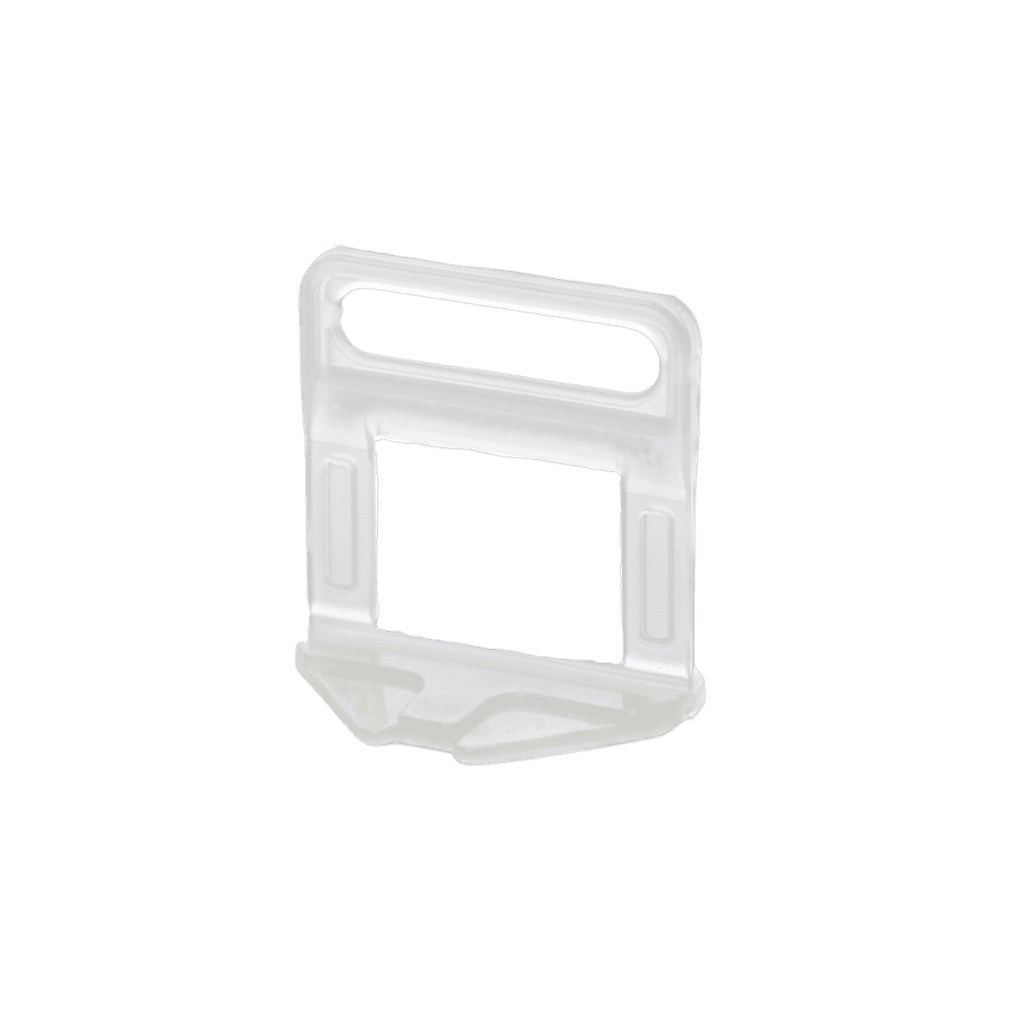
Reusable tile spacers have the same shape as classic spacers, but are equipped with a convenient handle on top, making them easy to remove from the joints after use.

Multifunctional tile spacers
A versatile option: these multifunctional tile spacers have multiple cut-outs so that you can use them as X-, T- or even I-spacers, depending on how you place them. Ideal for those who want to work flexibly with one type of spacer.


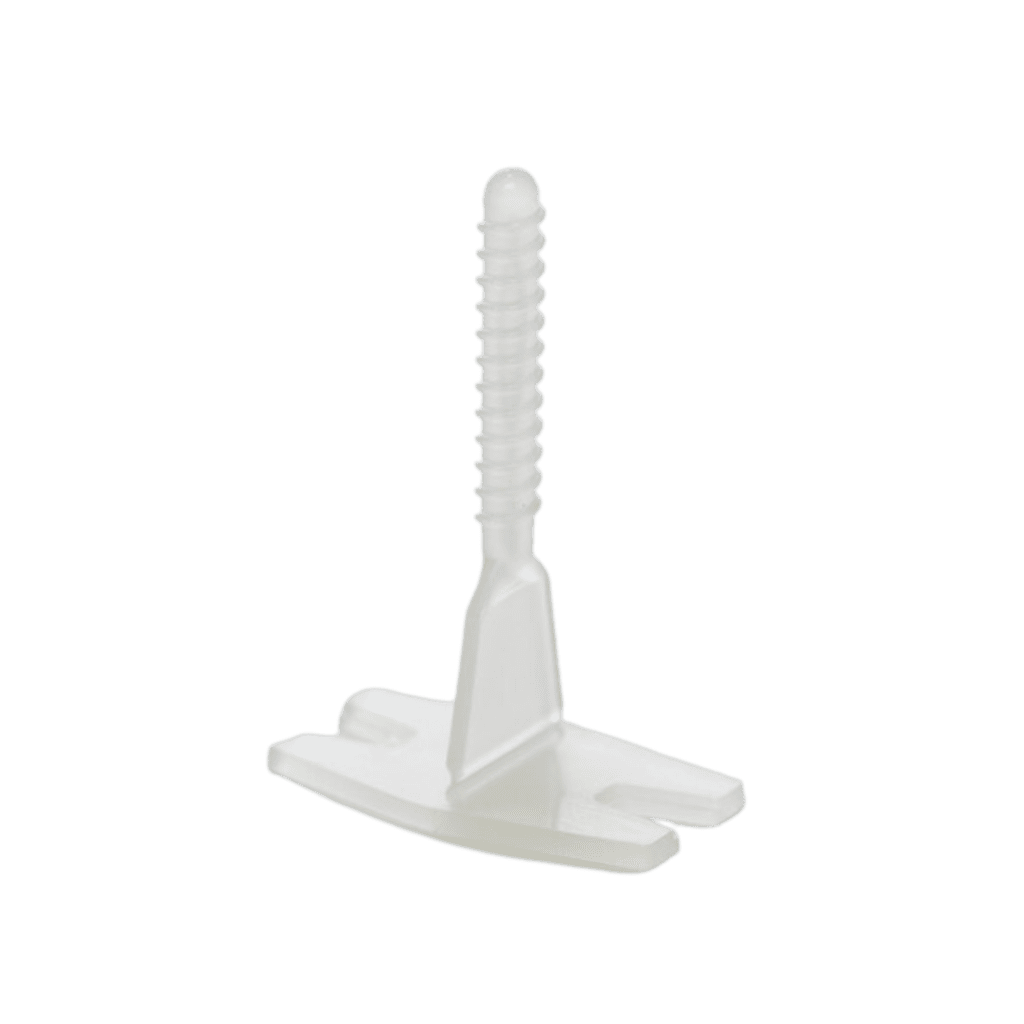
Self-leveling tile spacers
These innovative self-leveling tile spacers combine spacing and leveling in one. They automatically correct small height differences between tiles, allowing you to achieve a perfectly level end result without a separate leveling system. Especially useful with large-format tiles or less even substrates.
Points of attention when choosing tile spacers
Choosing the right tile spacers may seem simple, but there are a few important factors to take into account. With the right combination of shape, size and functionality, you get the most out of your tile project.
Joint width
The thickness of the tile spacer determines how wide your joint will be. Common sizes are 1 mm, 2 mm, 3 mm and 4 mm. Choose a narrow joint for a clean, modern look or a wider joint for rustic tiles or uneven substrates.
Type of tile
Are you working with large-format tiles, thick floor tiles or natural stone? Then sturdier or even self-leveling tile spacers are a smart choice. They not only ensure equal joints, but also help correct height differences.
Ease of use
Some tile spacers are reusable and easy to remove, which is useful for larger projects or if you want to be able to correct quickly. Other spacers are intended to be fixed in the adhesive and are only removed after curing.
Compatibility with leveling systems
Are you using a tile leveling system with clips and wedges or caps? Then check whether your tile spacers work well with that system. Not every type of spacer is suitable for this. There are special spacers designed for use in combination with leveling systems.
Summary: choosing the right tile spacers
Choosing the right tile spacers is therefore not a matter of “just grabbing something.” They form the foundation for an even finish, visual calm in your tile pattern and a durable end result. Anyone who wants to deliver a high-quality tiling job (large or small) would do well to invest in the right type of spacer, tailored to the tiles, the joint and the working method.
Are you looking for tile spacers that match your specific project? In our webshop you will find a wide range of shapes, sizes and types. Whether you work with ceramic, natural stone, small or large format, there is always a tile spacer that does exactly what you need. Ordered today, delivered tomorrow.

